Showing posts with label fall lawn care. Show all posts

Saturday, November 19, 2011

Fall Leaf Cleanup

The last little tomato
I was up on my roof last week blowing leaves out of the gutters with my leaf blower. After I was done I spent a minute looking out over the neighborhood and my own garden and contemplated the summer. Neighbor Ed’s garden was a huge success I would say. Now there isn’t much left except the stems from his tomato and pepper plants and maybe a stray watermelon. I have one little green tomato on my plant that probably won’t be there much longer, especially if we have a hard freeze like they are predicting.  
Leaves are a real problem this time of year. So many of them and what do you do: burn them? Bag them? Hope they blow into the neighbors yard? My neighbor down the street rakes them all on to his garden and lets them decompose over the winter and then tills them into the soil. This adds organic matter and nitrogen.

Before the mower...
I am doing something a little different. I have been blowing the leaves onto the lawn and then running them over with the lawn mower. The mower chops them up into dime sized pieces and does a good job of spreading them around. Over the winter they will start to decompose and next year the worms will slowly move the organic matter down into the soil.

Neighbor Dave has been mulching and bagging and so far he’s had about 15 bags of leaves out for the trash guy to take. I haven’t had any bags. I feel pretty good that I have kept a similar amount of leaves out of the land fill and here in my own yard to add to my own soil. I suppose you could make the argument that I used up some gas and caused some pollution by running my lawn mower but I would have been mowing the lawn anyway.

...after the mower
So why is it important to add organic matter to our soil? Well, no matter if your soil is heavy clay soil or sandy and well drained, all soil can benefit with the addition of organic matter. Organic matter breaks up heavy clay soil making it better for plant roots to move through the soil and become established. When soil is too sandy, organic matter helps it retain moisture. Organic matter also slowly changes the soil pH to more acidic, which most plants like. Our soil tends to be too alkaline, which reduces the plants’ ability to take up available nutrients. Adding organic matter to the garden or to perennial beds is easy because we can top dress with compost but getting it into the soil of an already established lawn in more difficult that’s why mulching leaves and leaving on the lawn is a good idea.

I haven’t yet put a winterizer fertilizer on my lawn and I will probably do so next week. The major holidays are a good reminder for yard chores and Thanksgiving is the reminder for winterizer. Putting fertilizer on in the late fall may seem odd since the grass is going somewhat dormant but it actually gets the lawn ready for spring. And Thanksgiving is probably a good time to ready the mower for winter as well.

Wednesday, November 2, 2011

Fall Chores

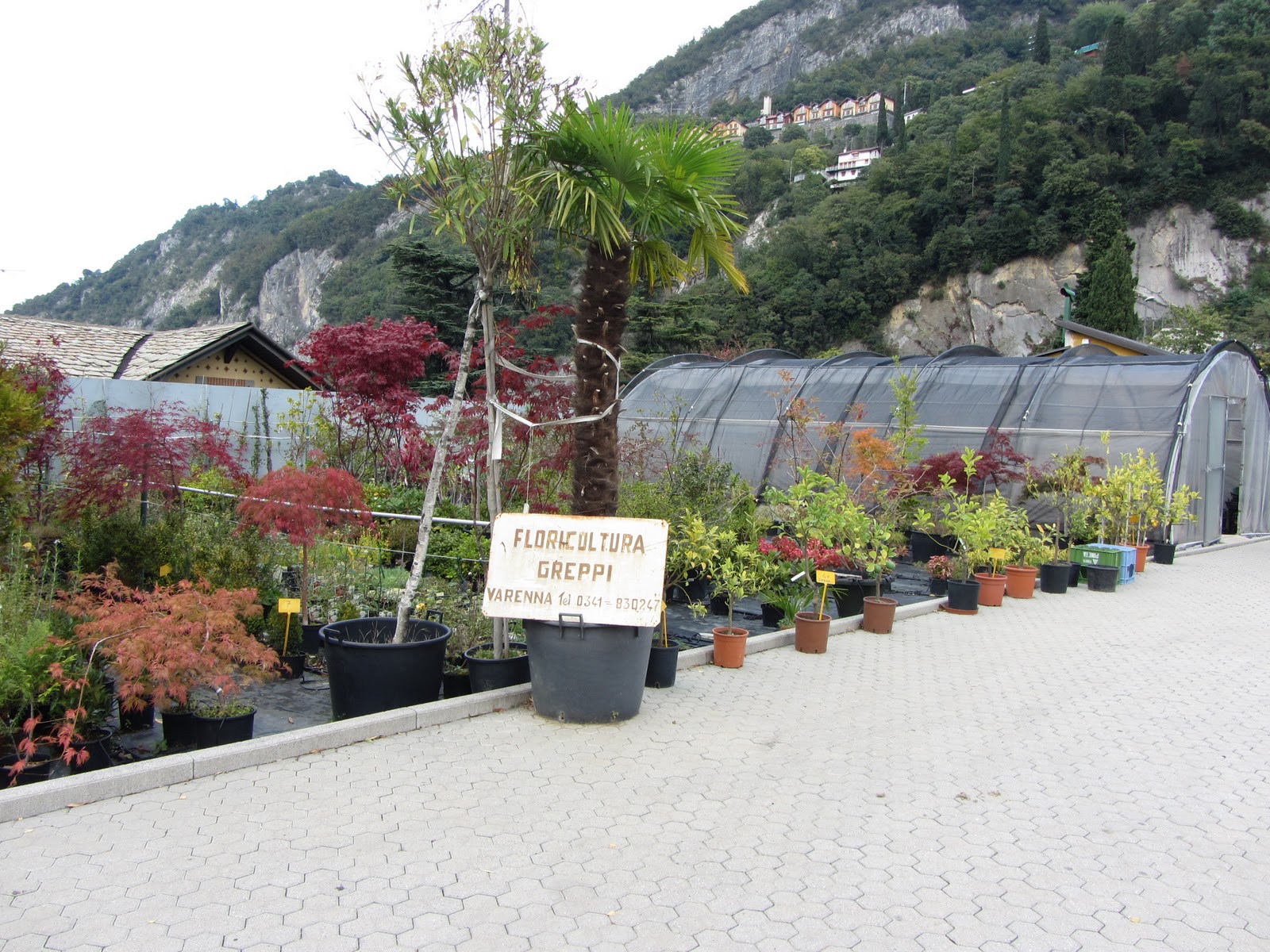
Nursery in Lake Como, Italy
I went to Italy last month and as usual I am always interested in seeing what the local horticultural industry is up to. We were in the Naples area and on the train between Naples and Sorrento I noticed numerous greenhouses and hoop houses (like Houses 5-21 at Countryside). Even speeding by at however fast the train was going I saw long stem roses and carnations. It was hard to resist the urge to get off the train to try and find the growing operations. Another crop I noticed growing was chrysanthemums. Our chrysanthemum season is about over but theirs was barely started! I did a little research when I got home and learned the Italy is the third largest producer of cut flowers. They also purchase 5% of all cut flowers. I did stop at a little nursery in Lake Como up by the train station and took a few pictures. I tried in my terrible Italian to explain to the woman working there that I also worked at a garden center but I don’t think I was successful.  
Always on the job!
Well, when I left it was the last of summer but I came back to fall and fall chores. If you are still mowing be sure to lower the mower deck a little bit each time you mow. Leaving the grass too long over the winter encourages disease as the grass flops over and doesn’t get good air circulation. It’s not too late for a last feeding of winterizer for the lawn. You could even wait until later this month to do it. 
If you are really in the mood for tidying up in the garden, you could cut back the perennials but don’t cut them all the way to the ground. I always like to leave the stems until spring. This gives the snow cover something to stick to and provides insulation through the winter and protects the plant against crown rot.

Rose Collars
Rose Cone
For you rosarians, we recommend using rose collars rather than rose cones. You can put the rose collars on now. They go around the base of the plant and then you fill the collar with top soil. Contrary to popular belief, this does not keep the plant from freezing. What it does is once the ground has frozen it keeps it frozen so that the plant does not undergo a freeze/thaw cycle. Sometimes in January or February we have a bit of a warm up and this can fool the plants into coming out of dormancy. Then we get a hard freeze that shocks the plants and can kill them. If you use rose cones, wait until the rose is fully dormant before pruning it back to fit the rose cone over it. Sometimes this isn’t until after Christmas. If we do get a warm up, remove the rose cone or remove the lid if it has one, so moisture doesn’t build up inside the cone.

And one last thing... Friday, November 11th is the Countryside Wine Tasting. This is a great event, not to be missed. The Countryside staff will all be there to kick off the holiday season with you.  Here's a link to the website with information about all the upcoming holiday events.

Sunday, November 1, 2009

Fall Lawn Care

I spent most of the day raking leaves. What a chore-- and a waste. Leaf compost is such a great addition to the garden soil. Really, adding any type of organic matter can improve just about any soil. Soil too sandy? Add organic matter. Soil to heavy? Add organic matter. Soils to alkaline? Again, add organic matter. Alot of people like to use mushroom compost, which contrary to its name, is not made from mushrooms but rather the compost (the straw from horse manure, poultry litter, ground corn cobs, rice hulls, etc) in which it is grown. It can be high is salts and is not the best compost to use in our heavy clay soils. Since we have so many leaves this time of year, why not compost them instead of burning them or adding them to land fills?

My neighbor down the street piles all of his leaves directly on his veg. garden and then tills them in right before he plants in the spring. If you don't have too many leaves to deal with you can just run them over with the mower and shred them. Don't leave too thick a layer (you may want to mow several times or rake them out) since they will smother the grass which leads to many more problems next spring. Also make sure you rake the leaves out of the flower beds because a thick layer of leaves will also smother your perennials. You could rake back in shredded leaves because they break down much more easily than non-shredded leaves.

I have a rotating composter so I am going to shred the leaves with the mower and then add them to the composter. I am hoping to get a good ratio of brown (leaves) and green (grass clippings that are high in nitrogen and gets the whole process started). I am also going to make a more concerted effort to add appropriate items from the kitchen to the composter. I did this last year and got a nice batch of compost but then sort of lost interest. My brother just digs a shallow hole off to the side of his yard and fills it in with the leaves and a few shovels full of dirt to start the composting process.

As we go into the winter season, you might want to consider giving the lawn one last feeding with a low nitrogen fertilizer (10-1-10 is a good analysis) but one that is high in insoluble nitrogen so that whatever the grass doesn't absorb this fall will still be in soil for the grass next spring.

Also begin to lower the deck on your mower. Usually we recommend a mowing height of 2-3 inches but as you get close to your last mowings gradually lower it to 1-1.5 inches. This will help prevent winter diseases like snow mold.